How to Use a Pressure Washer: A Step-by-Step Guide
Using a pressure washer can help you clean driveways, patios, siding, fences, and other outdoor surfaces more efficiently. However, the right technique matters as much as the machine itself. Too much pressure, the wrong nozzle, or an unsuitable cleaning solution can damage a surface or create a safety hazard.
The best way to learn how to use a pressure washer is to start with the manufacturer’s instructions, prepare the work area, select the appropriate spray pattern, and test a small section before cleaning the entire surface. This guide explains how to set up your equipment, use detergent, clean different materials, troubleshoot common problems, and store your machine safely.
Before You Use a Pressure Washer
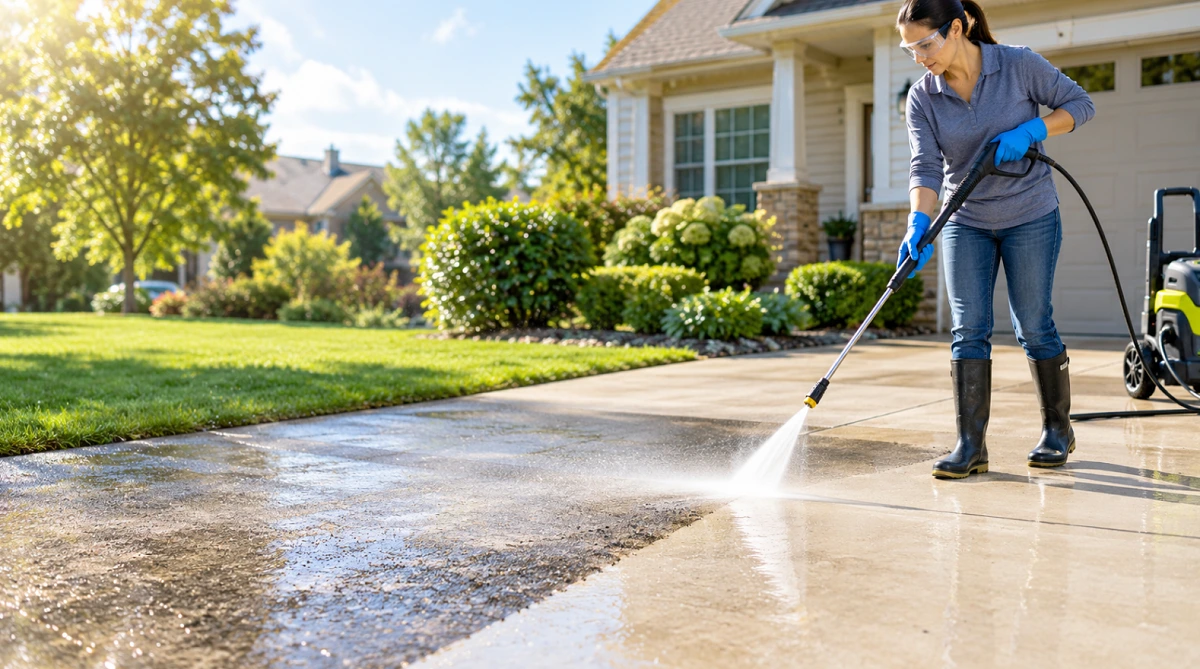
Before starting, identify the surface you want to clean and determine whether pressure washing is suitable for it. Concrete, wood, brick, vinyl siding, and painted surfaces have different cleaning requirements.
Gather the Necessary Equipment
Depending on your machine and cleaning task, you may need:
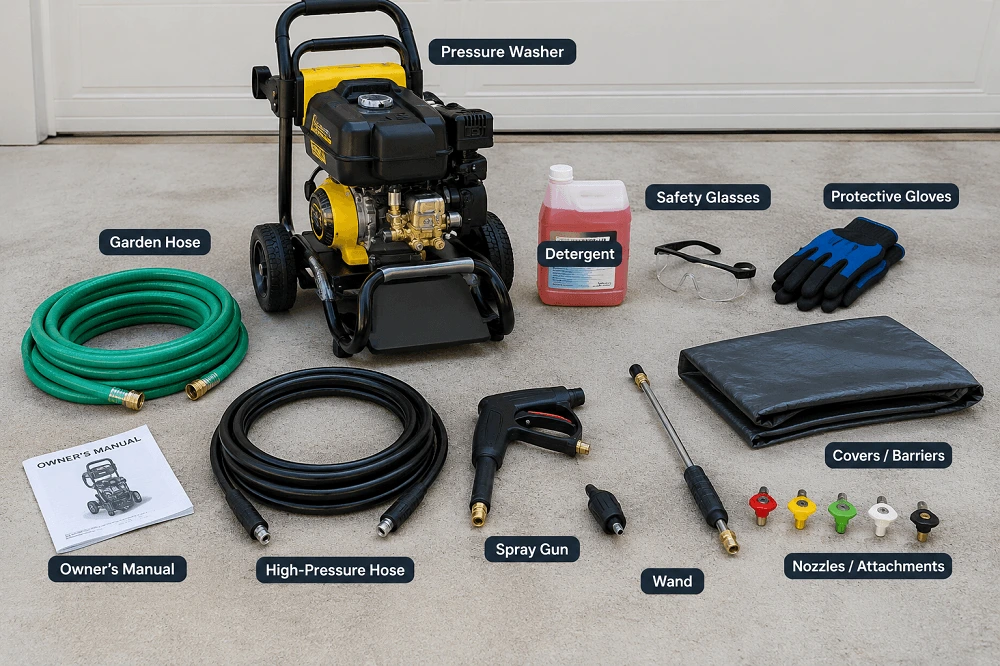
Inspect hoses, fittings, electrical cords, and accessories for visible damage. Do not use damaged equipment or attempt to operate a machine with leaking high-pressure connections.
Prepare the Work Area
Remove loose objects, outdoor furniture, toys, and other obstacles from the cleaning area. Close windows and doors, protect delicate plants where appropriate, and keep people and pets away from the spray.
Pay particular attention to electrical outlets, outdoor lighting, and other components that water could damage. Identify where the wastewater will flow before you begin, especially if the area contains oil, paint residue, detergents, or other contaminants.
How to Set Up a Pressure Washer?
Correct setup helps the machine operate as intended and reduces the risk of damage.
Connect the Water Supply
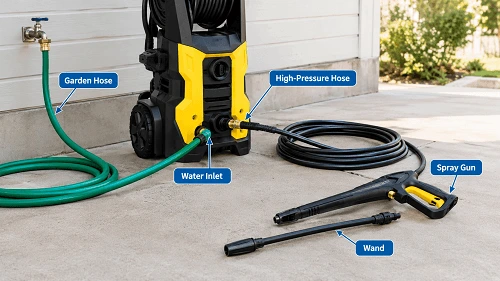
Attach a suitable garden hose to the pressure washer’s water inlet. Connect the high-pressure hose to the designated outlet and secure the spray gun and wand according to the manual. Check that the connections are compatible and properly seated. The water supply must meet the manufacturer’s flow and pressure requirements.
Attach the Appropriate Nozzle
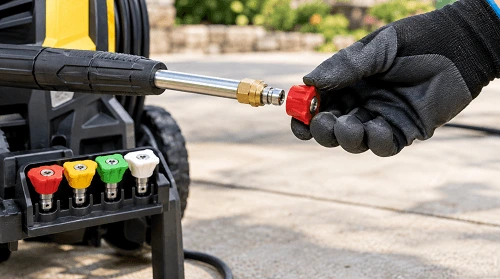
Install the correct nozzle or approved accessory with the machine switched off and the system depressurized, following the manufacturer’s instructions. Different nozzles produce different spray patterns. A concentrated jet can damage surfaces more easily than a broad fan spray, so avoid choosing a nozzle solely because it provides more cleaning force.
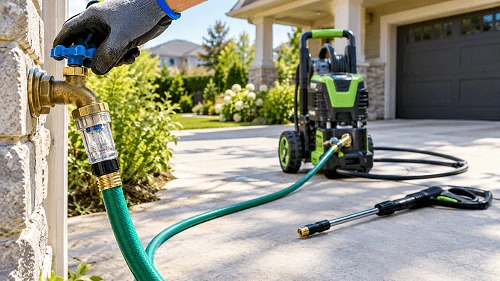
Turn on the Water and Prepare the Machine
Turn on the water supply and follow the manual’s priming or air-purging procedure. Many machines require water to flow through the system before the motor or engine is started.For an electric pressure washer, use the specified electrical supply and required ground-fault protection. For a gas-powered model, follow the engine-starting instructions outdoors in a well-ventilated area. Do not start the machine until the hoses, water supply, and other required connections are correctly configured.
How to Use a Pressure Washer Step by Step?
Once the equipment is set up, follow a controlled cleaning process.
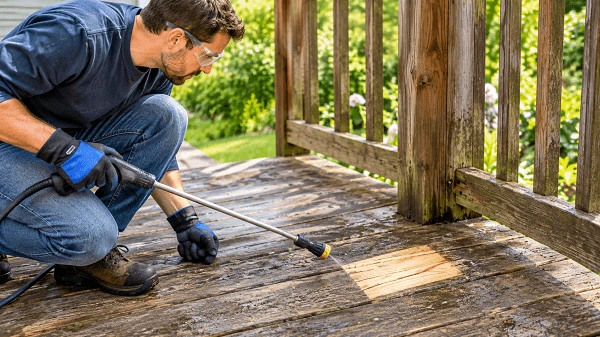
Test a Small, Inconspicuous Area
Start with a conservative spray pattern and technique recommended for the surface. Test a small area and inspect the result before continuing. Look for signs of etching, splintering, paint removal, loose mortar, or other damage. If the surface changes unexpectedly, stop and reassess the method.
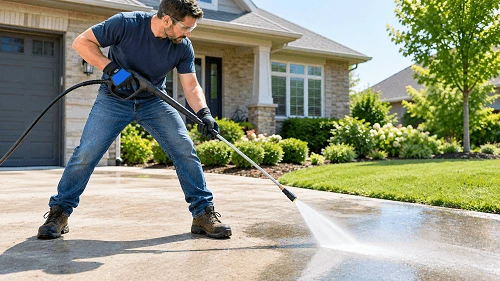
Hold the Wand Securely
Grip the spray gun firmly with both hands when appropriate for the equipment, maintain a stable stance, and be prepared for the reaction force when you squeeze the trigger. Keep the nozzle pointed away from people, pets, and electrical equipment at all times. Even a small-looking injury from a high-pressure jet can be severe.
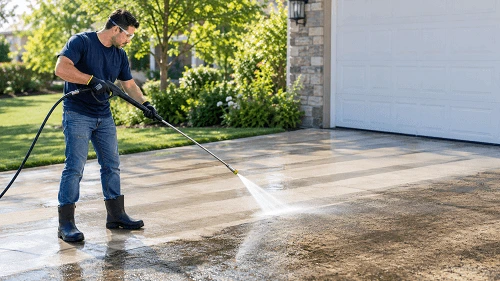
Clean With Controlled Passes
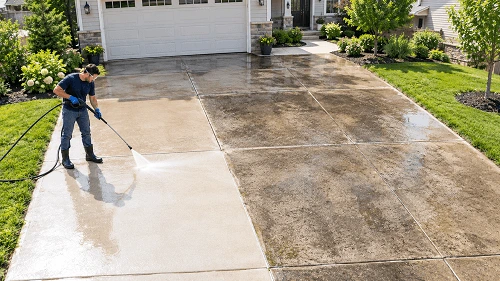
Move the wand steadily across the surface instead of holding the spray in one place. Use consistent, overlapping passes to reduce missed patches and uneven cleaning. Keep the spray moving and monitor the surface as you work. If the dirt does not come off, consider whether the surface needs a suitable cleaning solution, additional preparation, or a different method rather than immediately increasing pressure.
Work in Manageable Sections
Divide a large driveway, patio, or wall into smaller areas. This makes it easier to monitor your progress and maintain consistent coverage. Avoid spraying directly into joints, gaps, vents, or openings where water could enter. On vertical surfaces, use a technique appropriate to the material and avoid directing water behind siding or into vulnerable seams.
Rinse and Inspect
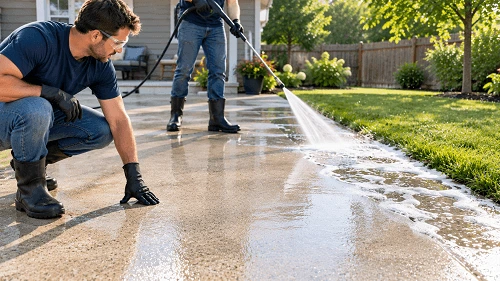
If detergent was used, rinse according to the product label and equipment instructions. Check that cleaning residue has been removed without directing contaminated runoff into an inappropriate drainage area. Inspect the finished surface in good lighting. If stubborn staining remains, identify the type of stain and the surface material before deciding on further treatment.
How to Choose the Right Pressure Washer Nozzle and Pressure?
The correct nozzle and pressure depend on the material, the machine’s capabilities, and the type of dirt you are removing. A powerful machine is not automatically the best choice for every cleaning job.
Understand PSI and GPM
Two important specifications are:
- PSI (pounds per square inch): Measures water pressure.
- GPM (gallons per minute): Measures the volume of water flowing through the machine.
Pressure affects the force applied to the surface, while water flow influences how much water is available to rinse away loosened dirt. Both matter, but neither specification alone determines whether a cleaning method is suitable.
Choose the Right Spray Pattern
Different nozzle designs create different spray patterns. Always verify the nozzle markings and compatibility in your owner’s manual.
| Spray pattern or accessory | General purpose | Important precaution |
| Broad fan spray | General cleaning where the surface permits pressure washing | Still test first; a broad spray can damage delicate materials |
| Narrower fan spray | More concentrated cleaning on suitable durable surfaces | Increases the risk of surface damage |
| Concentrated or zero-degree nozzle | Specialized applications approved by the manufacturer | Can cause severe damage or injury; unsuitable for many household surfaces |
| Rotary or turbo nozzle | Faster cleaning of certain durable surfaces | Use only when suitable for the material and machine |
| Surface cleaner attachment | More uniform cleaning of suitable large, flat areas | Check compatibility and avoid use on weak or damaged surfaces |
Do not assume that a nozzle color means the same thing on every product. Follow the markings and instructions for your specific model.
Adjust Technique Before Increasing Pressure
If dirt remains, first check whether the surface needs a compatible detergent, pretreatment, or a different cleaning method. Adjust your working distance and movement cautiously, testing after each change.
There is no single PSI setting or nozzle distance that is safe for every type of wood, siding, masonry, paint, or concrete. Surface condition and manufacturer guidance matter.
How to Use Soap in a Pressure Washer?
Detergent can help loosen grime, grease, and other buildup that water alone may not remove effectively. However, pressure washers use different detergent systems, so the correct procedure depends on your equipment.
1. Check the Detergent System
Your pressure washer may use a built-in detergent tank, a suction tube, a compatible injector, or a separate detergent applicator.
Read the manual to determine which system your machine uses and which nozzle or attachment is required. Some models dispense detergent only when a designated low-pressure nozzle is installed.
2. Select a Compatible Cleaning Solution
Choose a product labeled for pressure-washer use and suitable for the surface you are cleaning. Follow the product’s dilution instructions and protective precautions.
Do not assume that ordinary household cleaners, bleach, acids, solvents, or other concentrated chemicals are safe for your machine. For example, Greenworks warns against several such products in its operator manual because they can damage the pump. Other machines may have different approved products and procedures.
3. Apply the Soap Correctly
Follow these general steps, adapting them to the instructions for your model:
- Turn the machine off before filling a detergent tank or connecting an accessory if the manual requires it.
- Add the approved cleaning solution using the specified dilution.
- Install the designated detergent nozzle or applicator.
- Start the machine using the manufacturer’s procedure.
- Apply the solution evenly to the intended surface.
- Allow the product to work for the time stated on its label, without letting it dry.
- Switch to the approved rinsing setup and rinse thoroughly.
Some detergent systems operate differently, so do not treat this sequence as universal.
4. Troubleshoot a Soap Dispenser That Will Not Work
If the machine sprays water but does not draw detergent, check these items:
Switch off and depressurize the equipment before carrying out any inspection that requires disconnection. Never dismantle a pressurized system or bypass a safety feature to force detergent through it.
Electric vs. Gas Pressure Washers
Both electric and gas-powered pressure washers can be useful for outdoor cleaning. The right choice depends on the job, the machine’s capabilities, and the available operating conditions.
| Feature | Electric pressure washer | Gas pressure washer |
| Power source | Electricity | Gasoline |
| Setup considerations | Safe electrical connection and water supply | Fuel, engine setup, and water supply |
| Main safety concern | Electric shock around water | Carbon monoxide and fuel hazards |
| Where to operate | According to the electrical and weather limitations in the manual | Outdoors, away from buildings, openings, and air intakes |
| Best approach | Follow the manufacturer’s operating limits | Follow engine, fuel, ventilation, and maintenance instructions |
How to Use an Electric Pressure Washer?
Connect the water supply and hoses as instructed, confirm that the electrical connection and required GFCI protection are suitable, and prepare the machine according to its manual. Do not run the pump without the required water supply.
Keep electrical connections away from standing water and runoff. If the machine trips a circuit breaker, stop using it and have electrical problems checked by a qualified professional as appropriate.
How to Use a Gas-Powered Pressure Washer?
Inspect the machine, check its fuel and oil requirements, and follow the manufacturer’s starting procedure. Operate it outdoors in a well-ventilated area.
Never operate a gasoline-powered pressure washer inside a home, garage, or other enclosed or partially enclosed space. Carbon monoxide is an odorless, potentially fatal gas. The CDC also advises keeping gasoline-powered washers at least 20 feet from windows, doors, and vents.
Common Pressure Washer Problems and How to Troubleshoot Them
A pressure washer that does not operate as expected may have a water-supply issue, an incorrectly installed accessory, or a problem that requires professional service. Start with basic checks allowed by the owner’s manual.
| Problem | Safe checks | Next step |
| Weak or pulsating pressure | Check the water supply, hose connections, and approved nozzle for visible blockage | Follow the manual’s troubleshooting procedure |
| Machine will not start | Check the specified power supply or basic engine-starting requirements | Stop if electrical faults, fuel leaks, or mechanical issues are suspected |
| Soap will not dispense | Check detergent level, the suction tube, compatibility, and required soap nozzle | Consult the manual for the machine’s detergent system |
| Water leaks from a connection | Stop the machine and release pressure as instructed | Replace damaged approved components or seek service |
| Spray pattern looks uneven | Check for an incorrectly fitted or obstructed nozzle after shutdown and depressurization | Clean or replace it only as directed |
Never use your hands to locate a high-pressure leak. Do not tighten, remove, or repair a pressurized fitting while the machine is operating.
If a problem involves the pump, electrical components, internal pressure controls, or other parts you are not qualified to service, stop using the machine and contact an appropriate technician.
How to Turn Off and Store a Pressure Washer?
Proper shutdown is part of using the machine correctly. The exact order varies, so use your model’s instructions rather than assuming every pressure washer operates identically.
Shut Down the Machine
Release the trigger and switch off the machine according to the manufacturer’s procedure. Turn off the water supply and release remaining pressure as directed before disconnecting hoses or accessories. For electric models, disconnect the power only as specified in the manual and keep plugs and connections away from water. For gas models, follow the required engine shutdown and fuel precautions.
Clean and Inspect the Accessories
Check the spray gun, wand, nozzles, hoses, and detergent components for visible damage. Clean removable accessories only as directed by the manufacturer. Do not leave detergent in the system longer than the manual permits. Flush or clean the detergent components as instructed to reduce the risk of residue or blockage.
Protect the Pump From Freezing
If temperatures may fall below freezing, follow the manufacturer’s winterization procedure. Some machines require a specified pump-protection product or other approved storage method. Do not assume that every pump protector works with every model. Check the product label and owner’s manual before use.
Store the Equipment Properly
Store the machine in a clean, dry location that meets the manufacturer’s temperature and storage requirements. Drain or secure hoses as directed, keep accessories organized, and protect the equipment from freezing and accidental damage.
When to Hire a Professional Instead?
Pressure washing is not always the best DIY option. A professional may be appropriate when the surface is fragile, the contamination is hazardous, or the work requires equipment and expertise you do not have.
Consider professional help if:
For delicate exterior materials, soft washing or another low-pressure method may be more appropriate than direct high-pressure spraying.
If you need help with a home exterior, you can explore Power Washing LV’s following services:
- House Pressure Washing
- Driveway Power Washing
- Fence Power Washing
- Garage Floor Pressure Washing
- Patio Power Washing
- Deck Power Washing
Frequently Asked Questions
Conclusion
Learning how to use a pressure washer safely begins with understanding your equipment, preparing the surface, choosing the right spray pattern, and following a controlled cleaning process. Detergent can help with stubborn dirt, but it must be compatible with the machine and the material being cleaned.
The most important principle is to match the cleaning method to the surface rather than relying on maximum pressure. Inspect your work as you go, stop if damage appears, and follow the manufacturer’s instructions for startup, shutdown, and maintenance.
For surfaces that are fragile, difficult to access, or heavily contaminated, professional cleaning may be the safer choice.