How to Clean a Wood Fence Without Pressure Washing?
Do you know that pressure washing can damage your wooden fence instead of restoring its beauty? You might want to consider alternative, gentler, and safer cleaning methods and must learn how to clean a wood fence without pressure washing. Our work is not limited to just pressure washing residential and commercial spaces; our experts also guide you on which cleaning method is suitable for a particular surface.
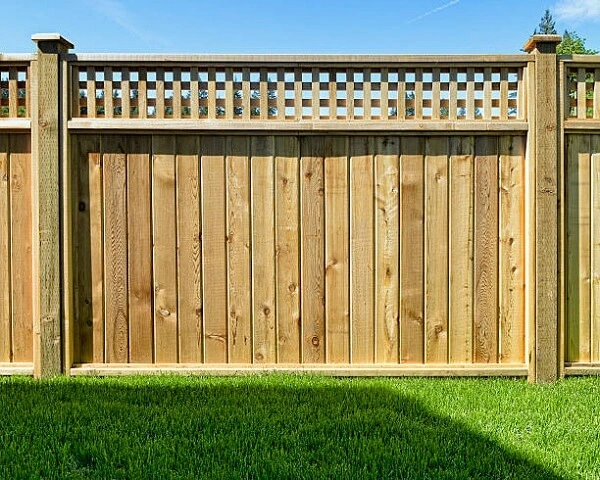
Undoubtedly, a wooden fence not only protects your property but also adds a natural finish to your garden. Due to its placement in an open environment, it’s often exposed to mold, dirt, weather stains, mildew, and more.
That’s why regular cleaning becomes crucial for preserving its appearance and to prolong its durability. If you want to protect your investment while restoring and maintaining your fence, this manual wooden fence-cleaning method is the smarter choice.
Why Avoid Pressure Washing of Wooden Fences?
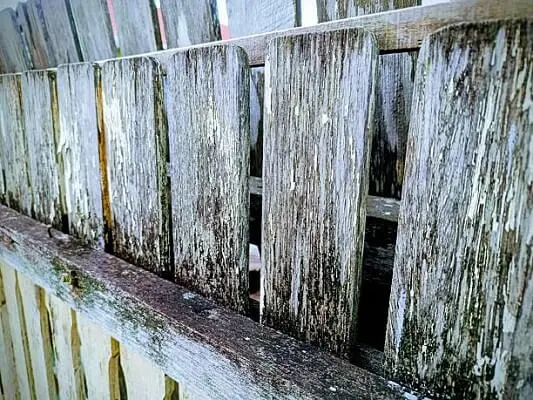
Although there are some professional fence power washers in Las Vegas, some woods like cedar are soft, so you need to use manual cleaning methods. That’s why you need a step-by-step guide on how to clean a wood fence without a pressure washer.
Tools & Supplies Needed for Manual Wood Cleaning
| Tool / Supply | What It Does |
| Bucket | It holds your cleaning solution for scrubbing each section. |
| Garden Hose + Nozzle | Gently rinses dirt and cleaner residue without blasting the wood. |
| Soft/Medium Bristle Brush | Removes grime and mildew without scratching the surface. |
| Spray Bottle | Applies cleaning solution evenly on stubborn spots. |
| Sponge / Cloth | Helps wipe away dirt and apply solutions in tight areas. |
| Gloves | Protects hands from splinters and cleaning mixtures. |
| Vinegar (optional) | Natural cleaner for mold and light stains. |
| Dish Soap (optional) | Mild detergent that lifts everyday dirt. |
| Baking Soda (optional) | Gentle abrasive for tougher spots. |
| Oxygen Bleach (optional) | Stronger cleaner to lift deep stains and mildew safely. |
Step-by-Step Guide
After collecting the above-mentioned tools and cleaning solutions, you’ve got to follow these simple steps for DIY fence cleaning:
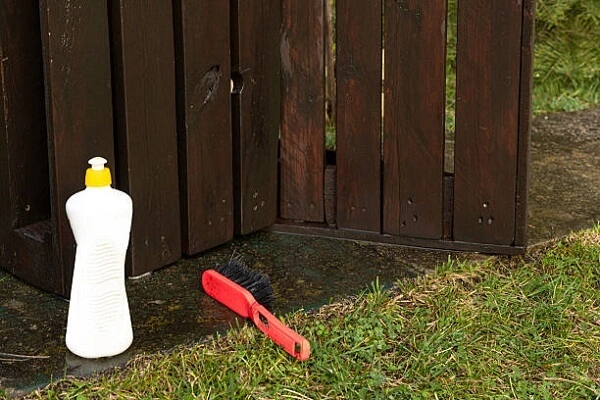
Step 1: Remove Loose Dirt
The first step in figuring out how to clean a wood fence without pressure washing is to sweep away loose debris like surface dirt, vines, or leaves from the fence. Then use a garden hose with a nozzle to apply a light spray, and scrub the surface with a bristle brush. After that, only the stubborn stains will be left, the ones that need deep cleaning.
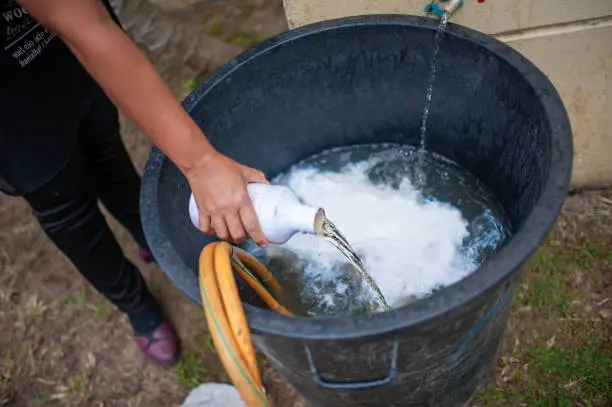
Step 2: Choose Your Cleaning Solution
You’ve got to choose different cleaning solutions to remove light debris, mold, and stubborn stains. So, we’re going to suggest three different cleaning solutions:
Option A: Mild detergent solution for light debris
Pour 1 gallon of warm water into a bucket, add ½ cup of white vinegar and ¼ cup of dish soap. You can adjust the ratio of cleaning products and increase the quantities depending on the size of the fence.
Then dip a cloth or sponge into the bucket and wet the entire fence. Allow the solution to penetrate the fence about 5–10 minutes so it can loosen the grime and debris. After that, lightly scrub using a soft-bristled brush. With this process, your wood fence will be completely clean of dirt.
Option B: Vinegar‑based mixture for algae & mold
If you notice that mold and mildew persist like glue that won’t leave, then it’s time to prepare a stronger cleaning solution. Combine one portion of bleach with three portions of water in a container, then use a sponge or cloth to spread the mixture onto the affected areas. using a sponge or cloth. Let the solution remain on the fence for 10-15 minutes.
Then scrub gently with a soft‑bristle brush and rinse the fence thoroughly with clean water. Make sure your nearby plants and grass remain unaffected by this cleaning solution. If they are exposed to the bleach solution, rinse them immediately with plenty of water.
Option C: Baking Soda Paste for stubborn stains
After removing dirt, debris, algae, and mold, stubborn stains can become your headache, but don’t worry, we’ve got the perfect solution for them. Baking soda paste is the right choice for fighting these stains.
Mix 1 part water with 3 parts baking soda, and you’ll get a toothpaste-like paste. Apply it to stains via a soft-bristle brush or sponge. Give it 15-20 minutes to show magic and to break up the buildup. Then softly scrub using a gentle brush or cloth, and rinse completely with fresh water.
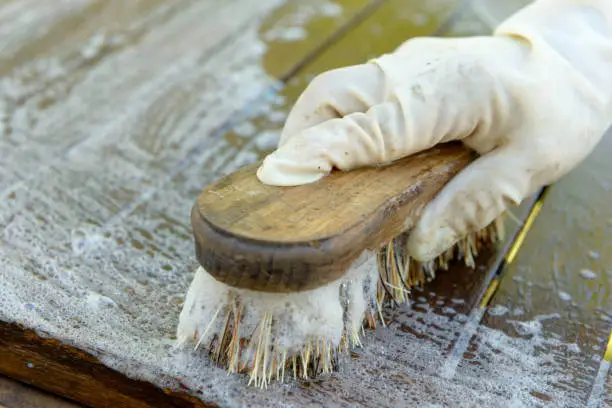
Step 3: Scrubbing & Rinsing
It doesn’t matter which type of cleaning solution you choose; the scrubbing and rinsing technique is the same for all the options I described above. While scrubbing, always remember to work from top to bottom so that dirty water doesn’t drip back onto already cleaned areas.
Once scrubbing is done, rinse the entire fence surface with a garden hose. Using a nozzle is a good idea because it lets you adjust the spray for a gentle flow, helping you clean wood fences without causing any damage. Always start rinsing from the top and work downward, so all the dirt, mold, grime, and residue run off the wood.
Drying & Final Touches
Once the scrubbing and rinsing are finished, let the wood fence dry for about 24–48 hours in good sunny weather. This is essential because if the wood stays damp, moisture can later get trapped under the coating, leading to peeling and uneven curing.
If you plan to seal or stain the wood, the drying process becomes even more important. Damp wood won’t absorb the product properly, and the result can be blotchy or offer weak protection against weather, UV rays, and mold growth.
For best results, let the fence air-dry in dry or mild conditions whenever possible, and avoid sealing or staining while the surface is cool, damp, or still showing water beading. Once the wood is completely dry, you’re ready to apply your chosen sealer or stain. This will enhance both the appearance and longevity of your fence.
Common Mistakes to Avoid
After reading this article, you’ll fully understand how to clean a wood fence without pressure washing, but it’s easy to slip up if you’re not careful. We’ve highlighted some common mistakes you should avoid when cleaning a wood fence manually:

Scrubbing too hard
Harsh scrubbing with a wire brush can damage the wood surface and leave unwanted scratches. So always choose a soft-bristle brush and scrub gently.
Not rinsing properly
If you don’t rinse properly, the remaining residue or cleaning solution can interfere with any sealant/stain applied later and may attract dirt faster. Always rinse thoroughly with clean water after scrubbing.
Cleaning in direct sunlight
Exposure to strong sunlight can make cleaning liquids evaporate too fast on the wood, which decreases how well they work. It’s better to clean in shaded or cooler conditions so the solution stays wet long enough to work properly.
Using too much bleach or harsh chemicals
Using too much cleaning solution in the water can strip the wood of its natural oils and weaken its structure, so stick to the proper mix ratios given in the cleaning solution options above.
Skipping sealing after cleaning
A clean but unsealed fence will quickly get dirty again and be more vulnerable to moisture and UV damage. Let the wood dry fully, then apply a sealant or stain to protect and preserve it.
How Often Should You Clean a Wood Fence?
We suggest cleaning your wood fence at least once a year. This is the minimum required to remove dirt, dust, and any buildup. If your fence is in a dusty, windy, or shaded area, cleaning it every 6–9 months can help prevent stains, mildew, or buildup from environmental debris, especially after windy dust storms or seasonal pollen.
In dry, sunny places like Las Vegas, we recommend staining or sealing your wood fence every 2–3 years to keep it protected from UV damage and weathering. It’s not a rocket science to learn how to clean a wood fence without pressure washing, just read this article carefully and you can do yourself. If you’ve busy schedule, you can also contact to professionals near you.
Can I clean a wood fence without chemicals?
If your fence is only covered in loose dirt or light debris, you can clean it with soapy water or a diluted white vinegar solution. But if there’s mold, mildew, or stubborn stains, you’ll need stronger cleaners like bleach blends or baking soda paste. Don’t worry, when used correctly and scrubbed gently with a soft brush, these solutions won’t harm your wood fence and will help lift away buildup effectively.